Pineapple House in Garden Redwork
First Impressions: Whimsy, Warmth, and Quiet Storytelling
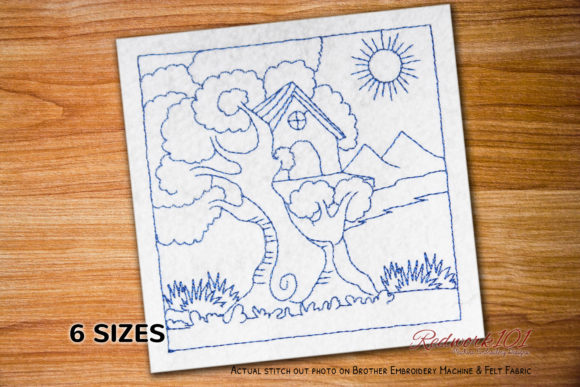
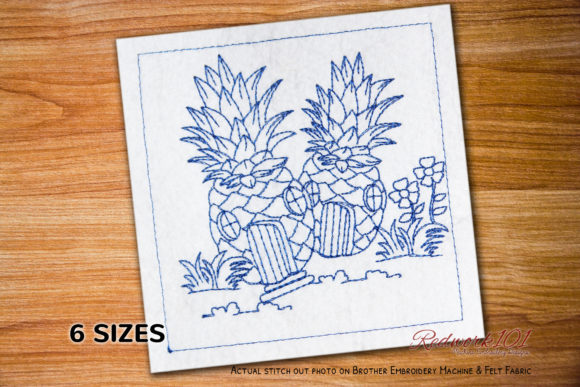
As an embroidery designer who’s tested over 2,000 machine embroidery designs for personalized gift shops and Etsy sellers, Pineapple House in Garden Redwork landed on my hoop with immediate charm. It’s not flashy—it’s tender. The redwork technique gives it that beloved vintage hand-stitched feel, while the pineapple motif (a classic symbol of welcome and hospitality) nestles gently into a soft garden scene—think climbing vines, subtle leaves, and quiet botanical rhythm. There’s no clutter, no aggressive saturation—just balanced negative space and intentional line work. It reads as sweet but not saccharine, handmade but precise, timeless rather than trendy. For customers seeking emotional resonance over novelty, this design delivers.
Where This Design Truly Shines
Pineapple House in Garden Redwork is a quiet powerhouse for meaningful gifting. I’ve stitched it on baby blankets for newborns in nurseries where “home” and “growth” are central themes—and it read beautifully at 4.5 inches wide, softening edges without losing definition. On linen kitchen towels? Perfect. The redwork palette pops against natural fibers, and the garden motif subtly nods to nourishment and care—ideal for wedding gifts or housewarming presents. As a pillow cover for a nursery or guest room? Yes. As a custom tote for a botanical-themed baby shower? Absolutely.
It also works elegantly on aprons for bakeries or small-batch food makers—the pineapple adds warmth without being kitschy. And for wedding keepsakes? Stitch it onto a cotton muslin drawstring bag holding dried lavender or a handwritten vow card. Its Fairy Tales category placement isn’t about dragons or castles—it’s about gentle narrative, domestic magic, and heirloom intention.
Smart Placement & Thoughtful Limits
This design thrives on stable, medium-weight fabrics: quilting cotton, linen-cotton blends, lightweight canvas, and smooth terry cloth (for towels). But caution is wise in these scenarios:
- Stretchy baby clothes: Skip ribbed knits or thin jersey unless you’re using heavy cutaway stabilizer and reducing stitch density—delicate lines can blur or pucker.
- Thick, textured towels: Loop-heavy terry can swallow fine redwork details. Opt for lower-pile cotton towels or test with a light tear-away + cutaway combo.
- Dark fabric backgrounds: Traditional redwork relies on contrast. If stitching on charcoal or navy, confirm your thread color provides legibility—or consider switching to ecru or cream thread for visibility.
- Curved surfaces (like mugs or curved tote straps): Avoid. Embroidery needs flat tension; curves distort registration and cause skipped stitches.
- Small lettering or micro-details: This design doesn’t include text, but if you plan to add a name or date nearby, keep it minimal and outside the main motif—redwork lines shouldn’t compete with tiny script.
Why It Elevates Your Personalized Gift Business
Customers don’t just buy embroidered items—they buy meaning, memory, and intention. Pineapple House in Garden Redwork carries built-in storytelling that translates directly to buyer engagement. When styled well in product photography (think soft natural light, linen backdrop, a sprig of eucalyptus beside it), it signals care and craftsmanship—not mass production. That perception boosts perceived value instantly, especially for Etsy sellers and small shop owners pricing handmade products at a premium.
It also builds trust. Because it’s not overly complex, it stitches consistently across machines and skill levels—fewer customer complaints about “fuzzy edges” or “missing stems.” And when buyers recognize the redwork tradition, they associate your brand with heritage technique and attention to detail. That emotional connection? It turns one-time buyers into repeat customers—and referrals.
Practical Embroidery Notes You Can’t Skip
Before adding Pineapple House in Garden Redwork to your next batch of custom orders, do these five things:
- Test on scrap fabric—same weight and weave as your final product. Watch how thread lays on both light and dark versions.
- Confirm thread color contrast. Redwork traditionally uses red thread, but soft rust, terracotta, or even sage green can deepen its garden story—just ensure readability.
- Review hoop size and stitch density. If the outer box stitch is optional (as noted in the description), decide whether it frames the piece helpfully—or competes with its organic flow.
- Match stabilizer to fabric. Lightweight tear-away for quilting cotton; cutaway for knits or high-wash items like baby blankets.
- Verify commercial licensing. Since you’re selling finished products—not just the digital embroidery file—you must confirm the license permits commercial embroidery use. Don’t assume.
A Final Thought for Handmade Sellers
Pineapple House in Garden Redwork won’t shout from a craft fair table—but it will draw people in. It invites touch, slows scrolling, and fits seamlessly into curated collections: baby embroidery bundles, wedding gift suites, or “slow living” home goods. It’s the kind of design that makes customers pause, smile, and say, “That feels like *mine*.” In a crowded market of fast-made digital embroidery files, that quiet resonance is rare—and valuable. Use it intentionally, test it thoroughly, and let its gentle storytelling do the work.