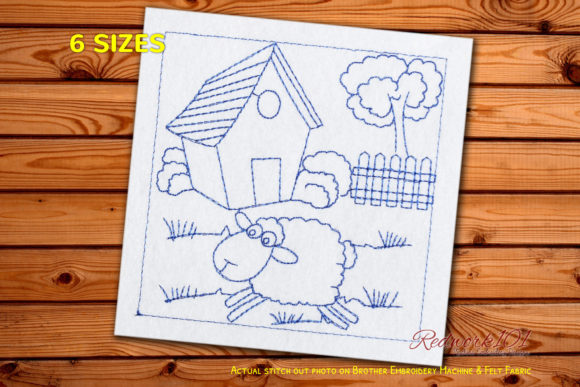
Sheep Jumping Redwork: A Charming Farm Animal Embroidery Design
First Impressions: Sweet, Playful, and Timelessly Handmade
As an embroidery designer who’s tested hundreds of farm animal motifs for gift shops and Etsy sellers, Sheep Jumping Redwork immediately stands out—not for flashiness, but for its quiet confidence. It feels handmade in the best way: warm, intentional, and full of gentle personality. The redwork style gives it a vintage charm without leaning into kitsch, while the sheep’s mid-air pose adds just enough whimsy to feel joyful—perfect for baby embroidery or nursery decor. It’s not overly detailed, which is a strength: this design breathes on fabric. No fussy outlines or micro-stitches that vanish on terry cloth or fray on stretchy knits. Instead, it leans into bold, clean lines and expressive simplicity—exactly what makes a personalized gift feel special, not generic.
Where This Design Truly Shines
Sheep Jumping Redwork is a versatile workhorse for small shop owners and handmade sellers. On a soft cotton blanket? It reads as tender and comforting—ideal for newborn announcements or baby shower keepsakes. Stitched onto a linen pillow cover or embroidered towel? It becomes a subtle signature piece—elegant enough for a farmhouse wedding gift or modern nursery wall display. For Etsy sellers, it’s a strong candidate for curated collections: “Farmhouse Baby Essentials,” “Rustic Wedding Keepsakes,” or “Hand-Embroidered Kitchen Gifts.” Because it’s rooted in the Farm Animals category but styled with refined restraint, it avoids seasonal limitations—it works year-round, whether paired with sage greens for spring or creamy ivories for winter weddings.
Custom tote bags, aprons, and even minimalist onesies benefit from its scale and clarity. Unlike busier animal motifs, Sheep Jumping Redwork doesn’t compete with fabric texture or pattern—it complements it. That makes it especially valuable for craft fair vendors offering personalization: customers love choosing thread colors that match their brand palette or nursery scheme. And because the redwork aesthetic implies hand-stitched authenticity, buyers intuitively associate it with care and craftsmanship—even when stitched by machine.
Where to Use It Thoughtfully
Like any thoughtful machine embroidery design, Sheep Jumping Redwork rewards intentionality. Avoid placing it on highly textured fabrics like heavy waffle-weave towels unless you’ve tested stabilizer support—dense terry can swallow delicate redwork outlines. Similarly, skip ultra-fine lettering or tiny accents *within* the design if you’re stitching on stretchy baby clothes; the motif itself holds up beautifully, but added text may distort. Curved surfaces—like mugs or rounded cosmetic bags—aren’t ideal either; stick to flat, stable substrates: pillow covers, blanket corners, tea towels, and tote fronts.
Dark fabric requires extra attention. While redwork traditionally pops on light backgrounds, this design’s contrast relies on thread color choice—not just red-on-white. Always run a printable mockup or stitch test on your intended base fabric. If using navy or charcoal, consider switching to cream, mustard, or slate thread instead of classic red to preserve legibility and emotional warmth.
Giftability, Trust, and Emotional Resonance
This is where Sheep Jumping Redwork quietly excels. Its charm isn’t loud—it invites pause. A customer browsing for a wedding gift doesn’t just see a sheep; they see nostalgia, tenderness, and intention. That translates directly to perceived value: handmade products with emotional resonance command higher price points and inspire repeat buyers. For digital embroidery file sellers, including lifestyle photos of the design stitched on a folded blanket or draped over a wooden chair boosts buyer engagement—showing context helps customers visualize their own finished product.
Small shop owners report stronger conversion when pairing Sheep Jumping Redwork with storytelling: “Stitched with care for your little shepherd” on a baby blanket listing, or “A quiet nod to new beginnings” in a wedding keepsake description. That narrative layer deepens trust—and reminds buyers they’re not purchasing pixels, but meaning.
Practical Embroidery Notes Every Maker Should Know
Before stitching your first customer order, take these steps:
- Test on scrap fabric—especially if using a new stabilizer or fabric type. Redwork relies on clean edges; puckering or shadowing changes everything.
- Confirm thread color contrast early. Even subtle shifts (brick red vs. cherry red) affect mood—soften for baby items, deepen for rustic aprons.
- Review hoop size compatibility. While not specified, most redwork farm animal designs fit comfortably in 4x4 or 5x7 hoops—verify before digitizing or resizing.
- Assess stitch density. Too dense = stiff fabric; too sparse = fragile details. Look for balanced fill and satin areas—no visible gaps in the sheep’s wool or legs.
- Use appropriate stabilizer: cutaway for knits, tear-away for stable cottons, and fusible + tear-away combo for towels.
- Compare light and dark fabric mockups. What reads as cheerful on ivory may read as muted on oatmeal—adjust thread accordingly.
- Check small details after stitching: legs, ears, and jump arc should remain distinct—not blurred or fused by thread buildup.
- Confirm commercial licensing before selling finished products. Since the outer box color is optional and customizable, ensure your license permits derivative use and resale.
Final Thoughts for Sellers and Stitchers
Sheep Jumping Redwork isn’t just another embroidery file—it’s a quiet invitation to slow down, personalize meaningfully, and celebrate life’s gentle milestones. Whether you’re an Etsy seller building a cohesive collection, a baby product creator stitching heirloom blankets, or a wedding gift designer curating tactile memories, this design supports your vision without overshadowing it. It’s proof that sometimes, the most memorable personalized gifts aren’t the flashiest—but the ones that feel like they were made just for *this* moment, *this* person, *this* story. Keep it in your core rotation. Test it thoughtfully. And let its simple joy do the talking.