Veiled Grim Reaper Design
A Designer’s First Look: Mood, Detail, and Emotional Resonance
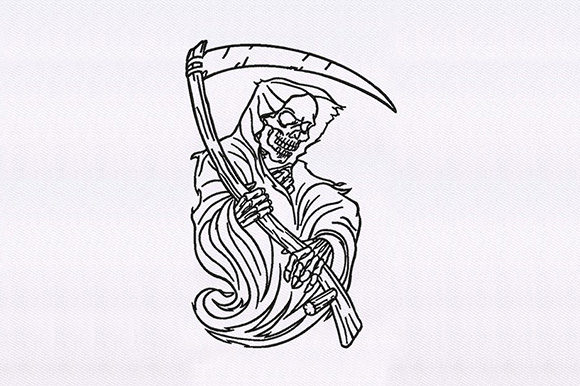
When I opened the Veiled Grim Reaper Design for the first time, I wasn’t expecting elegance—but that’s exactly what greeted me. This isn’t a cartoonish skeleton or a shock-horror motif. It’s a softly rendered, almost poetic interpretation: flowing veils, subtle shading in the embroidery file, delicate drapery around the figure, and restrained line work that leans into mystery rather than menace. The mood is quiet, contemplative—think gothic romance meets modern minimalism. It feels handmade, not mass-produced; intentional, not trendy. For a personalized gift, that nuance matters deeply. Customers drawn to this design aren’t just buying Halloween—they’re choosing symbolism: transition, remembrance, resilience, or even gentle humor about life’s cycles. That emotional layer makes it unexpectedly versatile across baby embroidery, wedding keepsakes, and family heirlooms.
Where This Design Truly Shines
The Veiled Grim Reaper Design excels on products where subtlety and storytelling elevate perceived value. On a blanket embroidery for a new parent who loves dark academia aesthetics? Absolutely—it becomes a conversation-starting nursery item, not just decor. Stitched onto a linen pillow cover for a newlywed couple with shared literary interests? It reads as romantic, not morbid. As an embroidered detail on a cotton apron for a baker who quotes Poe at brunch? Delightfully on-brand. And for an embroidered towel sold at a craft fair or listed by an Etsy seller, its refined silhouette photographs beautifully—even in natural light—and stands out among generic pumpkins or bats.
Small shop owners will appreciate how easily it adapts to seasonal and non-seasonal contexts. Yes, it fits naturally in a Halloween collection—but it also works year-round in “meaningful gifts” or “literary home goods” categories. A wedding gift stitched onto a hand-stitched journal cover or velvet clutch adds quiet sophistication. For baby embroidery, pairing it with soft grey or charcoal thread on ivory organic cotton creates a serene, gender-neutral heirloom—not a costume piece.
Where to Use It Thoughtfully
Like any expressive machine embroidery design, the Veiled Grim Reaper Design rewards intentionality. Avoid placing it on highly textured fabric (like heavy terry cloth or bouclé) without testing—delicate veiling details may blur. Thick towels demand denser stabilizer and possibly adjusted stitch density to prevent puckering, especially in the draped folds. Stretchy baby clothes? Not ideal unless you use lightweight cutaway stabilizer and reduce tension carefully—those fine lines need stability to stay crisp.
Curved surfaces—like tote bag gussets or rounded pillow forms—require repositioning the design or using a hoop with flexible mounting. And while the embroidery file includes multiple formats (DST, PES, VP3, and more), always confirm your machine’s native format and verify the hoop size before stitching. Small lettering isn’t present here, but the wispy edges of the veil *are* detail-sensitive—so avoid ultra-dark fabrics unless you test contrast thoroughly. Light thread on black fabric can fade visually; deep plum or charcoal grey often reads richer and more dimensional.
Why It Builds Trust—and Sales
For handmade sellers, perceived quality starts long before the first stitch. The Veiled Grim Reaper Design signals craftsmanship. Its balanced stitch density, thoughtful underlay, and clean jump stitches suggest professional digitizing—something customers notice in product photos and feel in the finished product’s texture. That builds trust. When a customer orders a custom embroidery piece with this design, they’re not just buying a motif—they’re investing in mood, meaning, and material care.
That emotional connection translates directly to engagement. An Etsy seller using this on a limited-run series of velvet pouches can tell a story in the listing: *“For those who find beauty in life’s quiet thresholds.”* That resonates. Likewise, a small shop offering personalized gifts can pair it with handwritten notes about intentionality—making each finished product feel curated, not automated. In photography, its graceful lines lend themselves to soft shadows and elegant flat lays, helping your small shop product stand out in crowded feeds.
Practical Embroidery Notes You Can’t Skip
Before stitching for a client—or listing your first handmade product—follow these steps:
- Always test on scrap fabric that matches your final substrate—same weight, weave, and pre-wash status.
- Check thread colors against both light and dark fabric mockups. Veil translucency relies on contrast.
- Verify your hoop size accommodates the full design width—some versions may run close to 5” wide.
- Use appropriate stabilizer: medium-weight cutaway for stable wovens, tear-away + topping for knits or napped fabrics.
- Review stitch density in your embroidery software—if it looks overly dense in the folds, consider slight underlay reduction for smoother drape.
- Compare light/dark fabric mockups digitally *before* stitching—many machines render differently on black vs. cream.
- Inspect small details post-stitch: veil ends, facial contour, and fabric tension around curves.
- Confirm commercial embroidery rights are included—this is essential if you’re selling the finished product (not just the digital embroidery file).
The Veiled Grim Reaper Design isn’t just another Halloween machine embroidery design. It’s a bridge between aesthetic intention and emotional resonance—a rare find for designers building meaningful, memorable personalized gift lines. Whether you’re an embroidery maker launching your first Etsy collection, a wedding gift designer curating bespoke keepsakes, or a baby embroidery specialist seeking depth beyond pastels, this design invites thoughtful application—and rewards it generously.