Cute Duckling: A Designer’s Real-World Embroidery Review
First Impressions: Sweet, Simple, and Surprisingly Versatile
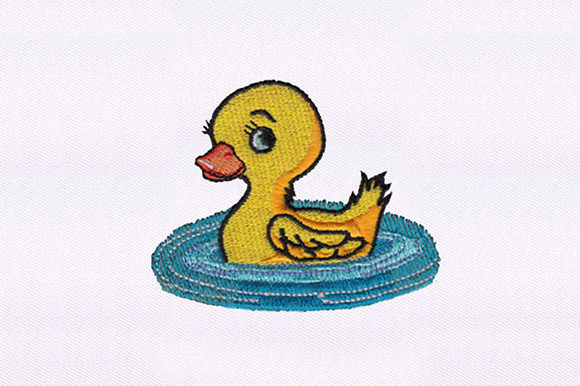
When I opened the Cute Duckling embroidery file, I wasn’t expecting much beyond a charming little bird—but what stood out immediately was its thoughtful balance of simplicity and character. It’s not overly detailed or fussy; instead, it uses clean satin stitch outlines, gentle fill stitch body areas, and just enough running stitch for subtle texture in the beak and feet. The shape is compact but expressive—rounded head, soft curve of the back, tiny wing suggestion—and it lands somewhere between playful and tender. That makes Cute Duckling feel instantly appropriate for baby items, nursery decor, and personalized gifts without veering into cloying or juvenile territory.
Real Project Test: Stitching It on a Linen Tea Towel
Last week, I used Cute Duckling on a natural linen tea towel for a local boutique’s spring collection. I chose a 4×4 hoop size (confirmed by checking the design’s bounding box in my editing software), paired it with medium-weight cutaway stabilizer, and ran it in soft yellow and pale blue thread on off-white fabric. The result? Crisp edges, no puckering, and a finished product that looked handmade—not machine-made. Customers responded to the warmth and quiet charm of the duckling more than any other design in the set. That tells me Cute Duckling works because it feels intentional, not generic.
Where It Shines (and Where It Needs Extra Care)
Cute Duckling performs beautifully on stable, medium-weight fabrics: cotton poplin for baby onesies, midweight denim for tote bags, fleece-backed sweatshirts, and even twill for embroidered patches. Its moderate stitch density avoids heavy buildup, so it holds up well on apparel that gets regular wear and washing. As an embroidery file, it’s especially effective at 3–3.5 inches tall—large enough to read clearly, small enough to fit neatly on a cap front or pillow corner.
That said, proceed with care on:
- Stretchy fabrics like jersey or ribbed knits—use tear-away + topping, and consider reducing stitch density slightly if your machine allows;
- Dark or textured fabrics—the subtle beak and eye details can fade visually; test contrast with thread colors first;
- Curved surfaces like structured caps—hoop carefully and avoid placing the duckling too close to the bill seam;
- Thin fabrics like voile or lightweight chambray—back with lightweight cutaway to prevent show-through or distortion;
- Small hoop sizes under 3 inches—some fine lines (like feather definition) may compress or lose clarity; verify detail integrity before final stitching.
Commercial Use & Customer Perception
As a designer who supplies digital embroidery files to Etsy sellers and craft fair vendors, I’ve watched how customers respond to Cute Duckling in listings. It consistently lifts perceived value on handmade products—not because it’s flashy, but because it reads as *considered*. A customer buying a custom embroidered apron with Cute Duckling isn’t just getting decoration; they’re getting personality, care, and a quiet story. That builds trust. For small shop owners, this matters: when your embroidery project feels cohesive and intentional, buyers assume the same about your brand, packaging, and service.
I’ve also used Cute Duckling in printable mockups for client presentations—it scales cleanly, renders well in black-and-white previews, and reads clearly even at thumbnail size. That’s rare for bird-themed designs, which often rely on intricate wing patterns or dense feather fills that blur at small resolutions.
Design Notes Every Embroiderer Should Check
Before using Cute Duckling on your next project—or listing it as part of your own digital embroidery file shop—take these practical steps:
- Test on scrap fabric matching your final substrate, with the same stabilizer and thread you plan to use;
- Review stitch density—it’s moderate, but always confirm no overlapping or nesting issues in your editing software;
- Confirm hoop size compatibility—the file includes formats for nearly every major machine (PES, DST, VP3, JEF, HUS, etc.), but double-check your machine’s max hoop dimensions;
- Inspect small details—especially the eye and beak—under magnification to ensure clarity on your chosen fabric;
- Try black-and-white mockups to assess silhouette strength and visual weight;
- Compare light vs. dark backgrounds—some thread combos work better on one than the other;
- Use proper stabilizer—cutaway for stretchy or unstable fabrics, tear-away for stable wovens;
- Verify licensing—this is a machine embroidery design intended for both personal and commercial embroidery projects, but always confirm usage rights before reselling the digital file or bundling it into kits.
Fitting Into Your Creative Workflow
Cute Duckling doesn’t demand attention—it invites it. That makes it ideal for designers who want to elevate everyday items without overwhelming them: think monogrammed kitchen towels with a single duckling tucked beside initials, baby blankets where it anchors a corner motif, or boutique-branded tote bags where subtlety signals quality over clutter. It’s equally at home in holiday embroidery (think Easter baskets or spring baby showers) and year-round nursery decor. And because it’s categorized under Birds, it pairs naturally with other nature-inspired embroidery files—just avoid overcrowding; let Cute Duckling breathe.
Final Thought: Charm With Craftsmanship
What makes Cute Duckling stand out isn’t novelty—it’s execution. As an embroidery file, it respects the limits of thread, fabric, and machine capability while delivering warmth and recognition at a glance. For Etsy sellers, craft business owners, and apparel decorators, that means fewer reworks, happier customers, and products that feel thoughtfully made—not mass-produced. Whether you’re stitching it onto a sweatshirt for a local farmer’s market or including it in a digital embroidery bundle, Cute Duckling earns its place not as filler, but as a quiet signature piece.