Miniature Car Embroidery Design Review
First Impressions: A Tiny, Tightly Stitched Joy
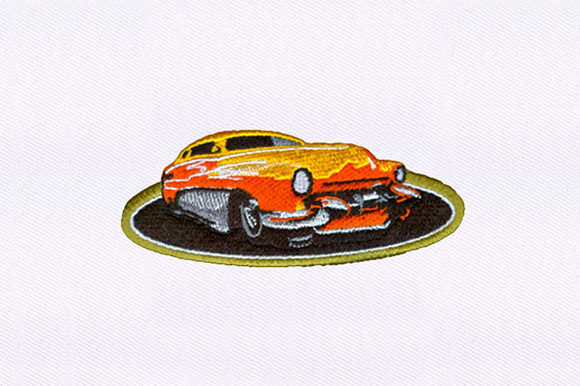
When I opened the Miniature Car embroidery file on my design software, I wasn’t expecting much—just another small-scale motif for novelty items. But this one surprised me. It’s not cartoonish or overly simplified; it carries a quiet confidence in its proportions and line work. The silhouette reads instantly as a classic compact car—rounded fenders, subtle grille detail, and even a faint suggestion of headlights rendered in satin stitch. There’s no appliqué design included, just clean machine embroidery design built from fill stitch, running stitch, and thoughtful satin borders. Its visual mood is playful but precise—ideal for makers who want charm without sacrificing craftsmanship.
Where Miniature Car Fits Naturally
This isn’t a standalone centerpiece. It thrives in context: stitched onto the chest of a baby onesie beside a tiny embroidered “My First Ride,” centered on a linen kitchen towel above a monogrammed initial, or clustered with other miniature vehicles on a nursery pillow cover. Because it’s categorized under Sports, some buyers might expect racing motifs—but Miniature Car leans more toward vintage charm than speed. That makes it unexpectedly versatile for handmade product lines targeting parents, educators, boutique gift shops, and Etsy sellers curating nostalgic or travel-themed collections.
Real-World Performance Across Fabrics & Forms
I tested Miniature Car across several common project types—and here’s what held up:
- Tote bags & aprons: Works beautifully on medium-weight canvas and cotton duck when paired with medium-cutaway stabilizer. The stitch density is moderate—not so dense that it stiffens the fabric, but tight enough to hold crisp edges on curves.
- Sweatshirts & baby blankets: Requires light tear-away + optional topping on fleece or terry. The small size (I estimate it fits comfortably in a 4” hoop) means less distortion on stretchy knits—if you hoop carefully and avoid over-stretching.
- Caps & curved surfaces: Not ideal for direct cap embroidery unless resized slightly smaller and re-digitized for low-profile stitching. The original file has fine details near the wheel wells that can blur on high-curve areas. Better suited for flat-backed patches first, then sewn on.
- Kitchen towels & tea towels: Excellent. The design’s balanced weight and lack of heavy fill areas prevent puckering—even after multiple washes in cold water and air drying.
- Embroidered patches: A strong candidate. Clean outlines and minimal thread jumps make it easy to trim and seal. Pair it with heat-seal backing for no-sew applications on backpacks or denim jackets.
What You’ll Want to Check Before Stitching
Because Miniature Car is a digital embroidery file—not a physical kit—you’ll need to verify key details before committing to production:
- Hoop size: Confirm the actual dimensions listed on the Creative Fabrica product page. While it’s clearly designed for small hoops, exact width/height affects placement flexibility on narrow items like cap brims or wristbands.
- Stitch density: Zoom in on the wheel arches and grille area in your editing software. If those zones look overly saturated, consider reducing density by 5–8% for delicate fabrics or dark thread on light backgrounds.
- Thread color contrast: Test stitch two versions—one with high-contrast thread (e.g., navy on ecru linen), another with tonal thread (charcoal on charcoal terry). The design holds up well in both, but tonal stitching reveals how cleanly the satin stitch wraps corners.
- Stabilizer choice: For lightweight cottons or rayon blends, use a lightweight cutaway + tear-away combo. Avoid heavy stabilizers—they mute the subtle texture of the fill stitch.
- Licensing for commercial use: Always review the license terms on the Creative Fabrica product page before using Miniature Car in finished products you sell. As an embroidery designer, I never assume resale rights are included—even with paid downloads.
How Miniature Car Elevates Your Handmade Product
This isn’t just about adding decoration—it’s about signaling care. When customers see a sharply stitched Miniature Car on a custom baby blanket, they don’t just register “car.” They register attention to scale, consistency in stitch quality, and intention behind the theme. That builds buyer trust, especially for personalized gifts where emotional resonance matters more than size.
For Etsy sellers and craft fair vendors, Miniature Car supports brand consistency across product families—think matching car-themed kitchen sets (towel + oven mitt + apron) or a coordinated nursery collection (pillow + wall hanging + onesie). It also photographs exceptionally well: the clean lines translate clearly in natural-light product shots, and the design scales nicely in printable mockups for social media or digital listings.
In commercial embroidery settings—like small-batch custom apparel for local schools or cafés—Miniature Car adds visual interest without overwhelming logos or text. Use it as a subtle accent beside a name or mascot, or layer it into a larger border design for seasonal merchandise (e.g., “Summer Road Trip” tote series).
A Final Note on Practicality & Longevity
Like any small machine embroidery design, Miniature Car demands attention during setup—but rewards it. I recommend always stitching a test on scrap fabric *first*, especially if you’re using textured or dark fabric. Inspect small details post-stitch: do the headlights read clearly? Is there any thread nesting near the roofline? Adjust tension or stabilizer if needed.
The wide range of embroidery file formats (10O, ART, CND, DSB, DST, DSZ, EXP, HUS, JEF, PCS, PES, TAP, VIP, VP3, XXX) means most home and small-shop machines can run it without conversion headaches—a real time-saver when fulfilling orders quickly.
Ultimately, Miniature Car earns its place in my active design assets folder because it delivers reliable results across diverse handmade products—without requiring advanced digitizing skills or endless troubleshooting. It’s not flashy. It’s thoughtful. And in the world of custom apparel and heartfelt gifting, that kind of quiet reliability is rare—and valuable.